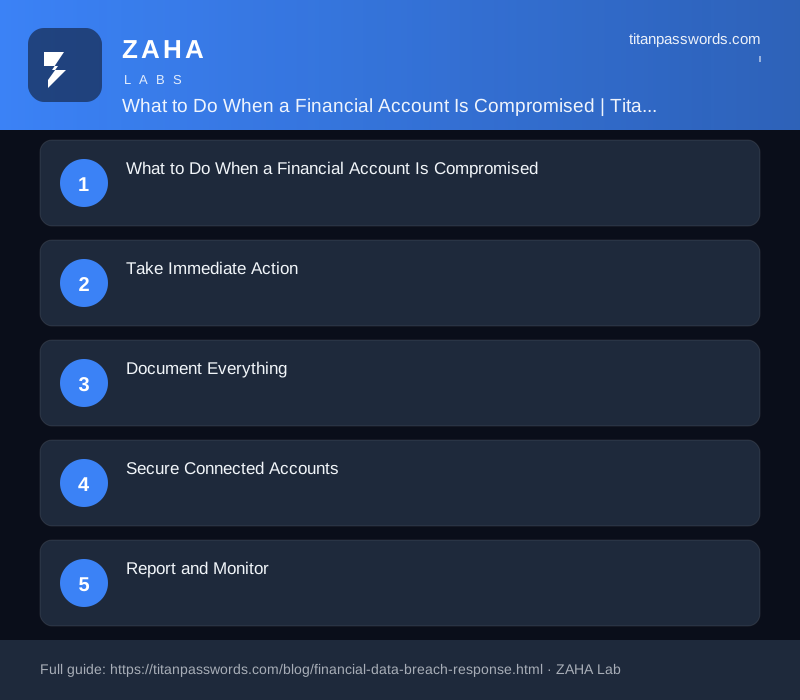
Financial account compromise requires immediate, structured action. The first hours after discovery are the most critical — fraudulent transactions that have not yet settled can often be stopped, and access paths that the attacker is still using can be closed. This guide provides a step-by-step response protocol.
What to Do When a Financial Account Is Compromised
Discovering that your bank, credit card, or investment account has been compromised triggers panic, but acting quickly and methodically limits the damage. The first hour matters most. Fraudsters move fast once they gain access, so your response needs to be faster. Follow a clear sequence rather than reacting randomly, and you can often stop losses before they spiral.
Take Immediate Action
The moment you suspect unauthorized access, contact your financial institution directly using the phone number printed on the back of your card or your official statement. Never use contact details from a suspicious email or text. Ask them to freeze the account, block pending transactions, and flag it for fraud review. Most banks have 24/7 fraud lines specifically for this purpose.
- Change the password immediately, and make it unique and strong
- Revoke active sessions and log out all connected devices
- Disable any unfamiliar payees, linked accounts, or transfer rules
- Enable two-factor authentication if it was not already active
Document Everything
Before you fix anything, capture evidence. Screenshot unauthorized transactions, suspicious login alerts, and any messages the attacker may have sent. Note the dates, times, and dollar amounts of fraudulent activity. This documentation supports your dispute claims and any police report you may need to file. Banks resolve cases faster when you provide a clear, organized record of what happened and when you noticed it.
Secure Connected Accounts
A single compromised account rarely stays isolated. If attackers accessed your primary email, they can reset passwords across every linked service. Treat your email as the master key and secure it first. Then review any account that shares the same password or recovery method.
- Update passwords on accounts that reused the breached credentials
- Check recovery email addresses and phone numbers for tampering
- Review authorized apps and remove anything you do not recognize
- Scan your devices for malware that may have captured keystrokes
Report and Monitor
Report the fraud to the appropriate authorities beyond your bank. File a complaint with your national consumer protection agency and consider placing a fraud alert or credit freeze with the major credit bureaus. A freeze prevents criminals from opening new accounts in your name. Monitor your statements and credit report closely for the following months, since stolen data sometimes resurfaces long after the initial breach.
Set up real-time transaction alerts so you catch future anomalies instantly. Many people only discover compromises weeks later, after substantial damage is done. Proactive monitoring closes that gap.
Prevent It From Happening Again
Once the immediate crisis passes, strengthen your defenses. The most common cause of account compromise is reused or weak passwords. A dedicated password manager generates and stores a unique, complex credential for every account, so a breach in one place never cascades into another.
Titan Passwords helps you eliminate password reuse, audit weak credentials, and lock down your financial accounts behind unbreakable encryption. Turning a stressful incident into a lasting security upgrade is the best outcome you can reach.
Immediate Response Protocol (First 60 Minutes)
- Call the institution's fraud line — number on the back of your card or their official website (not a number from an email). Request immediate account freeze.
- Do not use the compromised device to make this call or take subsequent actions if malware is suspected. Use a separate device.
- Document everything: Screenshot all visible transactions, note the time you discovered the breach, and record all reference numbers from fraud calls.
- Check linked accounts: If your bank account is linked to PayPal, Revolut, or other payment services, contact those services immediately.
Account Security Reset (Within 24 Hours)
- Change the compromised account password from a clean device
- Change the password on the email address used for the account
- Revoke all active sessions in the account settings
- Generate new MFA codes — revoke all registered authenticator apps and hardware keys, then re-register from scratch
- Check all personal details in the account (address, phone number, email) have not been changed by the attacker
- Disable any connected apps or API access that you did not authorise
UK Regulatory Protections
UK financial consumers have strong regulatory protections for fraud losses:
- Unauthorised transactions (where you did not initiate the payment): the bank must refund immediately under Payment Services Regulations 2017, unless they can prove you acted fraudulently or with gross negligence
- Authorised push payment (APP) fraud (where you were deceived into authorising a transfer): mandatory reimbursement up to £85,000 from October 2024 under PSR rules, shared 50/50 between sending and receiving bank
- Credit card fraud: Section 75 Consumer Credit Act 1974 provides joint liability for credit card purchases between £100 and £30,000
Understanding What Was Actually Compromised
Before taking any further action, it helps to understand the scope of what happened. Not all account compromises are the same. Someone may have accessed your account without moving any money, or they may have changed contact details to lock you out, or they may have initiated transfers. The type of breach determines what you need to prioritise.
Log into your account from a clean device — ideally one you have not used recently — and check the following before anything else changes:
- Your registered email address and phone number
- Any linked bank accounts or payment methods
- Recent login history, including times and locations
- Pending or recently completed transfers you did not authorise
- Whether any saved payees have been added
If your contact details have already been changed by the attacker, go directly to your bank or financial provider in person with identification, or call the number printed on the back of your card rather than any number found online.
Common Mistakes That Make Things Worse
In the stress of discovering a compromised account, it is easy to take actions that complicate your recovery or weaken your legal position. Avoid the following:
- Delaying the report: Many financial institutions have time limits on fraud claims. Reporting quickly strengthens your case and may determine whether you are reimbursed.
- Using the same device that was compromised: If your phone or computer was involved in the breach, using it to reset passwords may hand credentials straight back to the attacker.
- Trusting inbound calls claiming to be your bank: Fraudsters sometimes call victims immediately after a breach, posing as fraud teams. Hang up and call the official number yourself.
- Only changing your password: A password change alone does not revoke active sessions. Log out of all devices from within your account settings, or ask your provider to terminate all active sessions.
- Skipping the written record: A verbal complaint is harder to follow up. Always get a reference number and ask for confirmation in writing, even if it is just an email.
Verifying That Your Recovery Steps Have Actually Worked
One of the most overlooked parts of account recovery is checking that your actions had the intended effect. After completing a security reset, verify each step rather than assuming it worked.
- Send a test message to your registered email to confirm it routes to an inbox you control
- Trigger a test two-factor authentication code to your phone number to confirm it arrives on your device
- Check active sessions again after logging out of all devices to confirm the list is now empty
- Review linked accounts and payment methods a second time to confirm nothing was re-added
If anything looks unexpected after you have completed your reset, contact your provider again immediately. Some attackers set delayed rules — for example, email forwarding filters — that continue to operate after a password change.
Talking to Your Provider About Reimbursement
If money was taken from your account without your authorisation, you have the right to ask your financial provider to investigate and consider reimbursement. When raising this formally, be clear and factual. Explain what you noticed, when you noticed it, and what actions you had already taken to protect the account. Avoid speculating about how the breach happened if you are not certain.
Keep copies of every communication. If your provider declines your claim or does not respond within a reasonable timeframe, you can escalate to an independent financial ombudsman service. These services are free to use and exist specifically to resolve disputes between customers and financial firms.
Rebuilding Account Security After a Breach
Once the immediate crisis is resolved, use it as a prompt to review your broader account hygiene. A compromised account often reveals a weakness that exists elsewhere too.
- Audit whether you reused the same password on other accounts and change those passwords first
- Enable the strongest form of two-factor authentication your provider supports, preferring an authenticator app over SMS where possible
- Review which third-party apps and services have been granted access to your financial account and remove any you no longer use
- Set up account activity alerts so future unusual behaviour is flagged to you in real time
A breach is disruptive, but working through these steps methodically reduces the chance of it happening again and limits the damage if it ever does.